
Title: SpaceX's Relentless Starlink Launches: Are We Reaching Saturation?
SpaceX continues its aggressive deployment of Starlink satellites, launching another 28 from Vandenberg Space Force Base on November 23rd. This marks the 110th Starlink delivery flight this year, using a brand new Falcon 9 booster, B1100 – the eighth new booster this year alone. The pace is relentless. (SpaceX launches 28 Starlink satellites from Vandenberg on brand new Falcon 9 rocket – Spaceflight Now)
The Numbers Game: 8 Million and Counting?
SpaceX boasts 8 million Starlink customers. Sounds impressive, right? But let's dig a little. At, say, $100/month (plans vary, but that's a reasonable average), that's roughly $9.6 billion in annual revenue. Not bad, until you consider the cost. SpaceX has launched thousands of satellites. Estimates vary, but a single Starlink satellite costs several hundred thousand dollars to manufacture and launch. And that doesn't even include the development costs of the Falcon 9, ground stations, and ongoing operational expenses.
SpaceX doesn't release detailed financials (it's a private company, after all), so we're left to speculate. But even a back-of-the-envelope calculation raises questions about profitability, at least in the short term. Are they playing a long game, betting on future technological advancements to drastically reduce costs? Or are they relying on other revenue streams, like government contracts and Starship development, to subsidize Starlink's expansion? What happens when, say, 20 million people sign up? Will the satellites be able to handle the bandwidth?
Vandenberg: A Launchpad to Everywhere
Vandenberg is becoming a crucial hub for SpaceX. The location allows for launches into polar orbits, ideal for Starlink's global coverage. The article notes that the Falcon 9 took a south-easterly trajectory, targeting an orbit inclined at 53 degrees to the Equator. This trajectory hugs the California coastline. I wonder, how long can they keep up this pace of launches from Vandenberg without facing logistical bottlenecks or environmental concerns? The base is also slated for increased launches in 2026.
It's worth remembering that the FAA briefly restricted commercial launch hours due to the government shutdown. The effect on launch tempo is unclear (details on the specific restrictions are scarce), but it highlights the vulnerability of even SpaceX to bureaucratic processes.
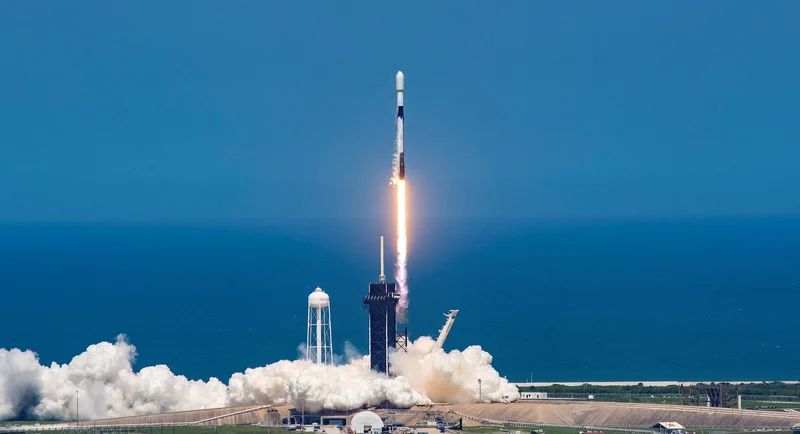
The launch also marks the debut of Falcon 9 booster B1100. SpaceX’s rapid booster reuse program is key to driving down launch costs. Landing on the drone ship ‘Of Course I Still Love You’ is now routine. But what is the average lifespan of a Falcon 9 booster before it requires major refurbishment or retirement? We hear about reuse, but rarely see the maintenance costs associated with it.
The Spectacle: Sonic Booms and Viewing Locations
The article details numerous viewing locations for the launch, from Santa Barbara to San Diego. It even mentions the possibility of sonic booms for residents in the area. This brings up an interesting point: the public perception of space launches. For some, it's a source of wonder and inspiration. For others, it's noise pollution and light pollution. (I, personally, have always found the rumble of a rocket engine deeply impressive.) How is SpaceX balancing the public excitement with the potential negative impacts on communities near launch sites? Are they actively engaging with local residents to address concerns?
The article also mentions the active train track near Surf Beach. It is stated that trains don't run during launch windows. This detail, while seemingly minor, underscores the inherent risks involved in spaceflight. A scrubbed launch could lead to unexpected disruptions, and potentially dangerous situations.
The Satellite Internet Bubble?
SpaceX has a first-mover advantage in the low-Earth orbit satellite internet market. But competition is heating up. Other companies are planning their own constellations, and advancements in terrestrial broadband technologies could eventually erode Starlink's competitive edge. Eight million customers is a good start, but is it enough to justify the massive capital investment?
I've looked at hundreds of these filings, and this particular business plan is unusual. It requires near-perfect execution across multiple domains (rocket technology, satellite manufacturing, regulatory approvals, customer acquisition) to achieve profitability.
So, What's the Real Story?
SpaceX is undeniably pushing the boundaries of space technology. Starlink has the potential to revolutionize internet access for underserved communities. But the economics are still murky, and the long-term sustainability of the project remains an open question. The relentless pace of launches might just be a race against time – a desperate attempt to achieve critical mass before the window of opportunity closes.